
Case Studies
Taylor Stapleton – DePaul University
- Written by: Jason Pafundi
- Produced by: Andrew Wright & Shea Donahue
- Estimated reading time: 5 mins
On a gray Chicago morning, Taylor Stapleton walks the halls of DePaul University‘s athletic facilities, past construction crews and the steady hum of renovation work. Not long ago, some of DePaul’s teams had nowhere to call their own, no dedicated locker room to gather in before a game or reset after a tough loss. Today, that gap is closing. It is one piece of a broader transformation that Stapleton, associate vice president and deputy director of athletics, has helped guide from the ground up.

Taylor Stapleton | DePaul University | Associate Vice President & Deputy Director, Athletics
DePaul University, a private Catholic institution on Chicago’s North Side, is home to the Blue Demons, who compete in the BIG EAST Conference at the NCAA Division I level. For Taylor, the university’s current momentum feels less like a single project and more like a full renaissance, one built on infrastructure, revenue generation, fan engagement, and culture all moving in the same direction, and one he has watched unfold from the very beginning.
A foundation built on revenue & relationships
Taylor’s path to DePaul started nearly a decade earlier in Lexington, Kentucky, where he grew up, earned degrees in business and athletic administration, and spent almost eight years working inside the athletic department at the University of Kentucky. There, he supported efforts across ticketing, hospitality, and digital marketing

That foundation was not just professional. Taylor points to the mentorship of DeWayne Peevy as a defining influence during those Kentucky years, someone who opened doors and modeled what it looked like to lead in a high-pressure, high-visibility athletic department. The lessons in revenue generation and fan engagement he absorbed there gave him a wide-angle view of how a modern athletic department runs and helped prepare him for a role blending financial strategy with long-term planning.
Taylor joined DePaul in November 2020, arriving in the middle of a pandemic that made it nearly impossible to meet people in person or get a real feel for the university. He calls that isolation a blessing in disguise, giving him the opportunity to slow down, build relationships virtually, deeply understand the department’s opportunities and position within the university, and spend more time developing strategy at a moment when the day-to-day demands of hosting events and serving fans were significantly reduced.
Building for a renaissance
When Taylor arrived, DePaul Athletics was working with facilities that had not kept pace with the rest of the program’s ambitions.
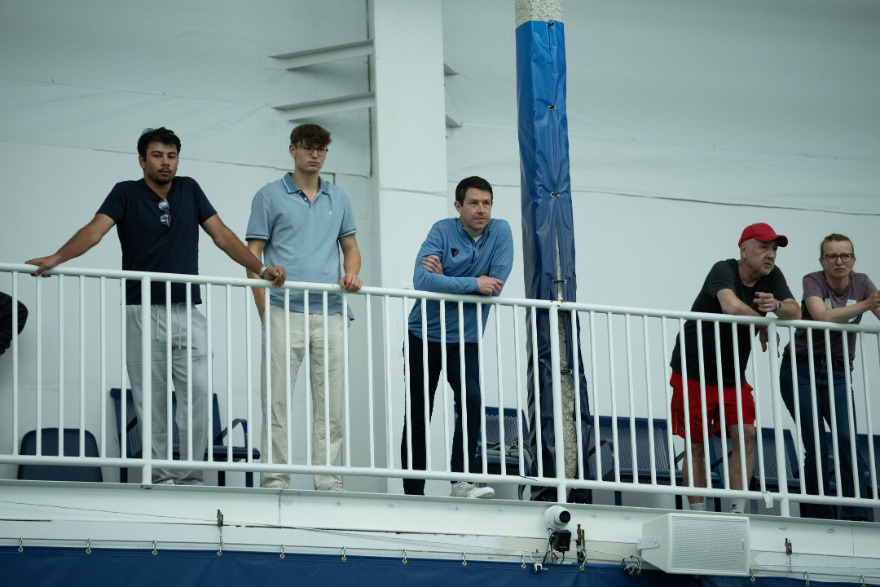
“When I came here in 2020, we were significantly behind in our facilities. We didn’t have locker rooms for every team,” Taylor says.
That gap made it difficult to recruit, let alone retain, top student-athletes in a crowded Chicago sports market. Closing it has required a series of major capital investments, including a nearly $10 million renovation of athletic office space, a new $50 million practice facility, and a rotating list of additional upgrades across the department. Inside the new facility, DePaul is even building a broadcast production room, a space designed to double as a classroom where students can gain hands-on media experience while producing the department’s own games.
None of it happens in isolation. Taylor works closely with facilities and information technology teams, construction professionals, coaches, and university leadership to keep every project aligned with DePaul’s long-term goals rather than the preferences of any single program. Coaches are consulted at every step and treated as subject matter experts in their own spaces, though Taylor is careful to note that the building ultimately belongs to DePaul, not to any one team.
“You have to future-proof things and ask whether something is a trend or here to stay,” Taylor says.
That mindset shapes even small decisions, like choosing digital graphics and magnetic locker panels that can be updated easily as rosters, branding and messaging evolve, rather than fixed installations that can quickly become outdated in the modern college athletics landscape, where roster movement and constant change have become the norm.
Competing like the pros
Chicago, Taylor says, is a sports town in the fullest sense, one that embraces a winning story at any level, from the professional ranks down to college athletics. That enthusiasm is an opportunity, but it also raises the bar DePaul has to clear every single day.
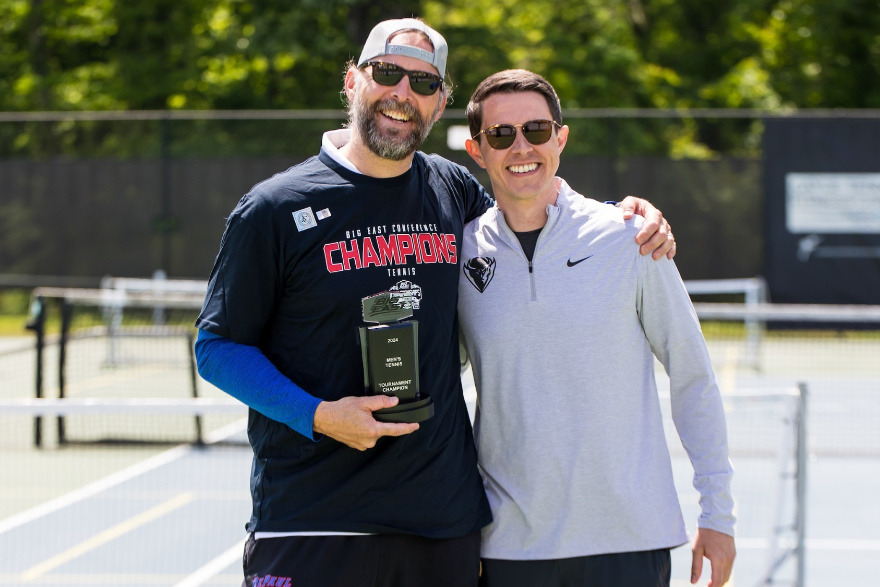
“Our fan experience has to mirror that of a professional team, because that is what the sports fan in Chicago is accustomed to,” Taylor says.
Fans naturally measure DePaul against the Bears, Bulls, Blackhawks, White Sox, and Cubs, franchises with budgets far beyond what a mid-major athletic department can match. DePaul has turned some of that dynamic into an advantage, forming partnerships with several of those same professional franchises and finding creative ways to elevate the in-arena experience, from splitting scoring tables to add premium seating to converting underused spaces into new revenue sources.
Basketball-related revenue remains the department’s clearest priority. Even as revenue expectations climb higher than ever, Taylor and his team stay disciplined about where they focus their energy, directing resources toward the revenue offerings with the largest margin while still supporting ticketed Olympic sports.
“We are competitors on the court, but we must be partners and teammates in the business,” Taylor says.
That philosophy extends across the BIG EAST Conference, where DePaul recently hosted the conference’s inaugural Revenue Summit at Wrigley Field, bringing peer institutions together for candid conversations about shared events and best practices. It is not about trading secrets, Taylor notes, but about raising the baseline for the entire conference together, an approach that feels different from the arms race he once witnessed in a Power Four league.
Investing in people as much as facilities
The results of that collaborative approach are already visible. DePaul just completed its best fundraising year in school history, alongside a 140 percent increase in licensing revenue and double-digit growth in ticket sales revenue.

Student-athletes have kept pace academically as the department has grown, a point of pride Taylor quickly credits to the broader team around him rather than to any single office. Balancing that growth with an increasingly unsustainable fundraising landscape across college athletics, driven in large part by NIL and revenue sharing demands, requires creativity, deeper use of data and analytics, and a staff built to cultivate relationships over the long haul.
Still, Taylor sees real opportunity in the disruption reshaping college sports right now.
“If someone is willing to be innovative and nimble, there is a lot of opportunity to make your mark,” Taylor says.
Outside the office, that same appetite for new experiences follows him. BIG EAST business takes him to New York regularly; the Final Four is an annual highlight complete with fan activations and merchandise strategy; and last year he helped wrap a car in DePaul apparel for the NASCAR Chicago Street Race, calling the experience genuinely fascinating. He also points, without hesitation, to Chicago’s food scene as one of the job’s unexpected perks.
As construction continues around him and DePaul’s renaissance builds toward its next chapter, Taylor keeps returning to the same idea: the buildings matter, but they are only a means to an end. The real investment is in the people: the coaches, student-athletes, donors, and colleagues who will carry DePaul Athletics forward long after the construction dust has settled.
Showcase your feature on your website with a custom “As Featured in Blueprint” badge that links directly to your article!
Copy and paste this script into your page coding (ideally right before the closing


