
Case Studies
Nick Hamilton – Ferguson
- Written by: Jason Pafundi
- Produced by: Julianna Roche
- Estimated reading time: 8 mins
Growing up in Suffolk, Virginia, Nick Hamilton was raised in a project family, where weekends and evenings were often spent fixing, improving, and caring for the things they had. Work was not something outsourced by default; it was something the family took on together. That mindset followed him early. As a teenager, Hamilton’s father volunteered him to help a neighbor who owned a construction company, and one of his first memories on the job was hauling 80-pound bags of Quikrete all day long. It was hard, physical work, but it taught him something lasting: buildings do not take care of themselves. They work because people plan, build, maintain, repair, and take pride in the details no one else may ever notice. He figured he would eventually end up in computers or engineering. Instead, fate and a restless curiosity steered him toward a career spent managing the infrastructure that keeps complex organizations running, one generator test, one broken flush valve, and one trust deficit at a time. That early exposure to hard, practical work shaped how Hamilton still views facilities today: the best systems are built by people who understand the details, respect the trades and know that reliability is earned long before anyone notices something has gone wrong. He never planned to end up here. He also cannot imagine being anywhere else.
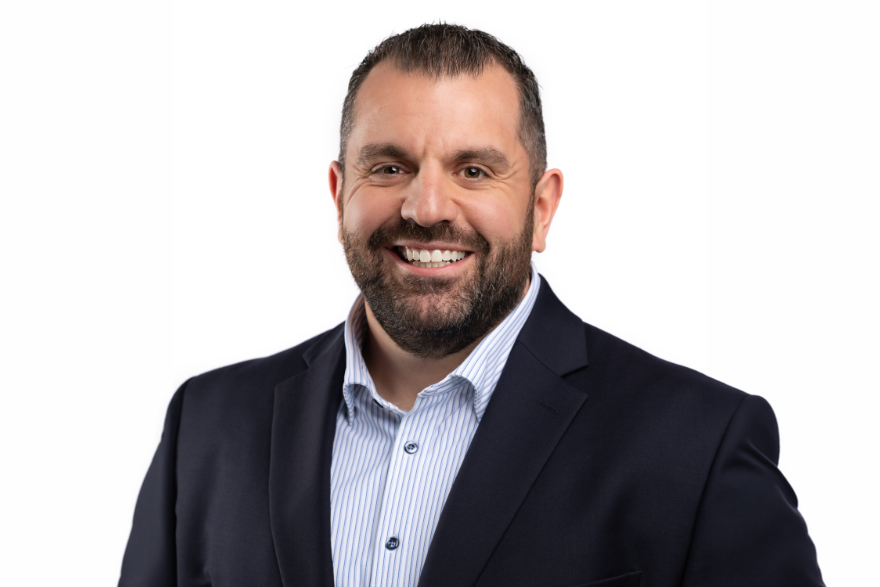
Nick Hamilton | Ferguson | Director, Enterprise Facilities Management
Today, Hamilton serves as Director of Enterprise Facilities Management for Ferguson Enterprises, North America’s largest wholesale distributor of plumbing, HVAC supplies, appliances, and waterworks. Headquartered in Newport News, Virginia, Ferguson supplies professional contractors, builders, and facility managers across the U.S., Canada, and the Caribbean. It is a sprawling, logistics-intensive business that demands operational precision across 1,500 locations and nearly 58M square feet under roof —and Hamilton is the person responsible for building the facilities function capable of delivering it consistently, at scale, and in a way the rest of the organization actually trusts.
Laying a foundation
When Hamilton stepped into his current role in February 2025, Ferguson was not simply changing leaders; it was changing the way facilities support worked across the enterprise. This change launched a new operating model, moving away from a centralized, transactional approach and toward a regional, field-connected structure designed to put ownership closer to the customers FM serves. The core challenge was clear: trust had to be rebuilt through consistency, responsiveness, and follow-through. That credibility gap became his first order of business, shaping every hire, every process, and every conversation that followed.

“Stepping into this role, we recognized we didn’t have trust out in the field,” Hamilton says. “They didn’t trust what the previous facilities management function was providing. We brought in people passionate about trust and customer service.”
But Hamilton knew trust would not come back because the organization had a new name or structure. It would have to be earned through the daily work: answering calls, solving problems, challenging vendors, owning follow-up, communicating clearly, and proving to the field that Facilities Management could be counted on.
That meant recruiting deliberately and selectively. With nearly 130 candidates considered for just eleven open positions, Hamilton rebuilt and reorganized a team across several distinct operational verticals. The hires were not just about filling seats—they were about embedding a service-first mentality into the organization’s DNA and sending a clear signal, both internally and to stakeholders in the field, that something had genuinely changed. His management philosophy extends that same principle downward through the team.
“There is a pyramid of trust, and it all falls apart with a lack of trust,” Hamilton says. “I tell my people that I trust them to make the decisions for their teams and service lines.” That trust is intentional. Hamilton wants decisions pushed closer to the people who understand the region, the vendors, the facility conditions, and the impact on the customer. The goal is not to centralize every answer; it is to create shared standards while empowering the team to act with ownership.
Conducting without micromanaging
Managing seven direct reports across a largely remote organization requires a particular kind of leadership discipline. Hamilton describes himself as a conductor rather than a controller—focused on keeping everyone aligned and moving rather than calling every play. Bi-weekly one-on-ones with direct reports and alternating large leadership team meetings create a consistent rhythm that surfaces problems early, prevents bottlenecks, and keeps momentum intact. The questions are purposeful and steady: what are the blockers, what are the talent issues, what needs to move? The rhythm also helps break down silos between service lines. In a function that touches real estate, design, project management, finance, vendors, field operations, safety, and customer experience, alignment is not a soft leadership concept. It is how the work gets done.

“Trying to keep up with seven people and everything they’re working on isn’t easy,” Hamilton acknowledged. “I’m the conductor, ensuring everyone is using the same sheet of music.”
His approach to leadership has evolved alongside the growing complexity of his responsibilities. He no longer leads with a single style; instead, he adapts to what each team member needs at any given moment. For a function that exists entirely to serve others, that flexibility is not optional. It is what separates a high-performing FM organization from a reactive one. Facilities Management may not generate revenue directly, but it protects the operating environment where revenue is created—keeping locations safe, open, compliant, and ready to serve customers.
The data imperative
One of Hamilton and the FM team’s defining contributions at Ferguson has been establishing a meaningful data and analytics capability that simply did not exist before his arrival. During his years at AECOM and CBRE, analytics were largely absent from the facilities conversation, particularly in government contracting environments where operational continuity mattered far more than measurement and reporting. At Ferguson, the team is using data as an active management tool—generating facility condition scores, tracking vendor spend by category and region, identifying recurring issues, and constructing the financial narrative necessary to secure capital investment from a demanding finance team. The purpose is not analytics for the sake of analytics. It is to give Finance, Real Estate, Project Management, field leaders, and Facilities Management a common fact base for deciding where to invest, what to repair, which risks matter most, and how to prioritize limited resources.
The methodology is precise. Eleven facility managers cover the entire United States, each assessing locations against a scoring system that rates building conditions from zero to 100 across multiple dimensions. The central challenge is calibration—ensuring that a score of three in one region means exactly the same thing as a score of three in another. Hamilton’s solution is direct: traveling with the team to conduct live calibration sessions that align individual judgment with organizational standards. That calibration matters because it turns individual observations into enterprise-level intelligence. A roof concern in one region, an HVAC issue in another, or a recurring compliance risk somewhere else can be evaluated against the same standard, giving leadership more confidence in the recommendations that follow.
“Data helps us move from reacting to individual work orders to understanding patterns across the portfolio,” he says, illustrating the kind of granular, actionable insight the analytics function is designed to surface and act on. But the same discipline applies to larger portfolio questions: which HVAC assets are approaching failure, which roofs pose future capital risk, which vendors perform consistently, which lease obligations are being missed, and which facilities need investment before small issues become operational disruptions.
The data also serves a longer-term purpose. When Hamilton’s team needs to stand before Ferguson’s finance group to request capital, the scoring system provides the evidence base. Facilities management is a cost center—it generates no revenue. Instead of relying on anecdotal facility requests or one-off escalations, the team can present defensible, portfolio-level investment recommendations tied to condition, risk, cost, and business impact. That ability to quantify and communicate value is essential to the function’s long-term influence and credibility within the company.
Building something that lasts
Hamilton’s path to Ferguson was shaped by experiences that drove home the full weight of infrastructure responsibility. During his time supporting Joint Forces Command as a Department of Defense contractor, he worked on a critical power infrastructure replacement project that left a lasting impression. When systems cannot fail, the consequences of carelessness are not inconveniences—they are mission-ending failures. That experience established a standard he has carried through every role since. At Ferguson, that mindset shows up in the way the team approaches critical systems across the portfolio: fire protection, HVAC, generators, backup power, emergency response, and the compliance routines that help keep buildings safe and operational.

At CBRE, supporting the ADP account broadened his understanding of facilities as a strategic business driver rather than a maintenance obligation. That work reframed how Hamilton thinks about his entire role: not as a support function operating quietly at the margins of the business, but as a genuine enabler of organizational growth and performance.
At Ferguson, he is applying that philosophy at enterprise scale through a broader modernization effort: better scopes of work, stronger vendor accountability, more consistent templates, cleaner data, and more disciplined planning. The team is also cautiously exploring artificial intelligence for tasks like drafting HVAC scope-of-work templates, operating under a trust-but-verify model that balances executive encouragement with Hamilton’s own measured pragmatism. Vendor relationships and team expertise remain the foundation, with technology serving as a capable assistant rather than a replacement for professional judgment.
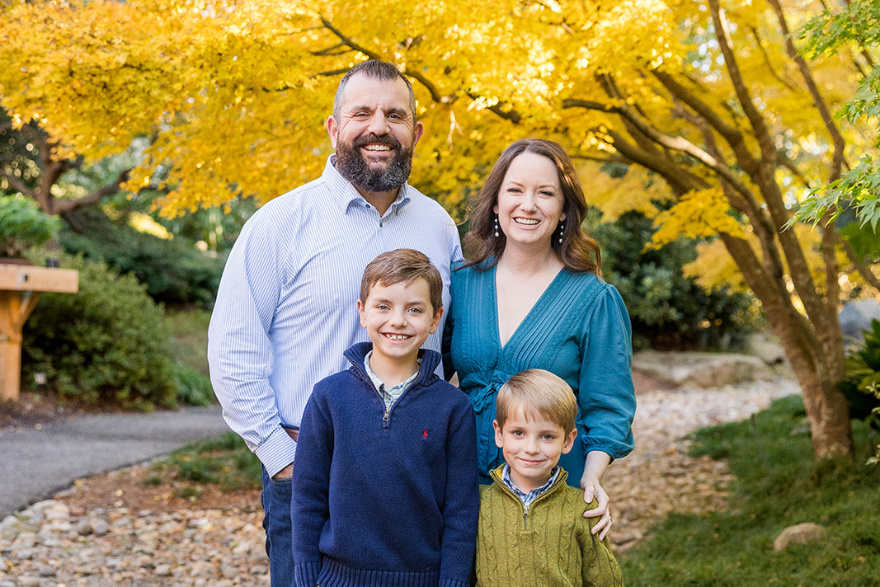
Meanwhile, Hamilton is also building something more personal. Five years ago, he bought a piece of property, drew his own floor plan in AutoCAD, spent 3.5 years refining the design, and broke ground with his family on April 1—serving as his own general contractor. The project has reinforced the same lessons he applies at Ferguson every day: plan carefully, sequence the work, respect the trades, manage cost, solve problems in the field, and never assume that a drawing, budget or schedule will manage itself. It is the same instinct that drew him to facilities work in the first place: understanding how things are built, and caring enough to build them properly.
The work at Ferguson is not finished—it never is, in a function designed to support a business that keeps growing. But the direction is clear, the team is in place, and the early results are building exactly the credibility Hamilton set out to earn. Trust was not rebuilt through messaging. It is being rebuilt through response time, ownership, data, follow-through, and an FM team committed to doing the work. The sheet music is written. The orchestra is learning to play in tune.
Showcase your feature on your website with a custom “As Featured in Blueprint” badge that links directly to your article!
Copy and paste this script into your page coding (ideally right before the closing


