
Case Studies
Karen Flachman – Kuraray America
- Written by: Jason Pafundi
- Produced by: Andrew Wright & Benny St.Clair
- Estimated reading time: 5 mins
There is a meeting happening somewhere right now where nobody can agree. The engineers want more time. The contractors need a decision. The budget is already strained. And someone from Tokyo is waiting on a call.

Karen Flachman | Kuraray America | Manager, Project Engineering
Karen Flachman has been in that meeting. In fact, she has built a career out of surviving them—and, eventually, out of making them unnecessary.
As manager, project engineering at Kuraray America, Flachman occupies a role that requires equal parts technical command and interpersonal finesse. She does not run the plant. She does not fight fires. She engineers the conditions that prevent them—steering capital projects from conception through commissioning while keeping a multinational organization pointed in the same direction. The work is slower and more deliberate than operations, and that is entirely the point.
“I’m not in a firefighting role,” she says. “I’m making sure the fires don’t happen in the first place. And when you finally see a project come to fruition after years of work, that’s incredibly rewarding.”
Kuraray America, a subsidiary of Japan-based Kuraray Co., Ltd., develops and manufactures specialty chemicals and functional materials—including polyvinyl alcohol (PVOH), ethylene-vinyl alcohol (EVOH), and vinyl acetate monomer (VAM)—serving industries that range from food packaging to construction materials. Its Houston-area manufacturing facility is a cornerstone of North American operations, and it is there that Flachman’s work is most visibly taking shape across three interlocking initiatives anchored in sustainability, environmental compliance, and long-term reliability.
The art of alignment
Flachman’s professional edge is not confined to Gantt charts or budget forecasting, though she executes both with precision. Her deeper skill is cultural translation—bridging the expectations of Japanese parent-company leadership with the pace and communication norms of American site operations.
Japan-based decision-makers tend to operate through consensus-building, careful documentation, and layered approval. U.S. site teams move faster, communicate more directly, and chafe at ambiguity. Flachman navigates both environments fluently, adjusting her register depending on the room.
“Reading the room is huge,” she says. “Whether I’m presenting to Japan or working with operators on the floor, I have to understand what each group needs to hear and how they need to hear it.”
That cultural dexterity becomes operationally significant when projects stall. Rather than allowing misalignment to calcify into costly delays, Flachman works to surface misunderstandings early, resolve them diplomatically, and move before they damage the schedule or budget. She describes her approach as firm but tactful—willing to escalate when necessary, but always in a way that preserves working relationships on both sides of the Pacific.
A greener foundation
Among the projects now in her portfolio, the Plantic production line stands as an early demonstration of what that style of leadership can accomplish at scale. The initiative brought technology from a Kuraray sister company in Australia to the Houston site, installing a production line for bio-based oxygen-barrier materials derived from cornstarch. The materials serve food-packaging applications—trays and films for meat products, coatings inside premium coffee bags—replacing fossil-based inputs with a renewable alternative. Wegmans adopted the technology for its organics packaging line.
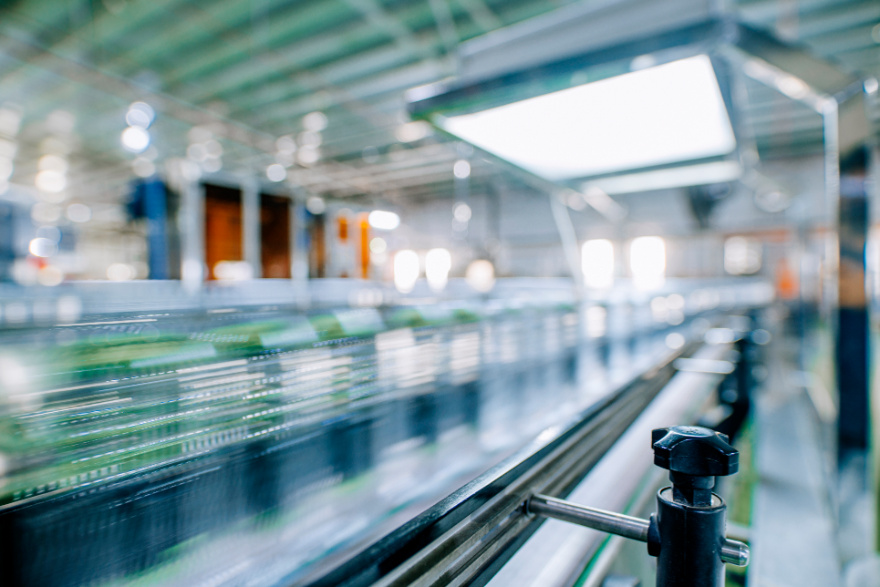
Flachman served as cost and schedule engineer on the effort, managing monthly reporting to Japan, forecasting capital expenditures, and navigating the budget-schedule interlocks that define complex industrial construction. The project ran from 2018 to 2021 and arrived on budget.
“A project like Plantic requires you to translate technical complexity into financial language for stakeholders in Japan,” she says. “You have to tell the story of where the money is going and why, in a way that builds confidence across thousands of miles.”
The Plantic line also signaled a directional shift for Kuraray America—away from legacy practices and toward more environmentally aligned operations—a trajectory Flachman is now advancing through a second major initiative.
Moving water differently
The Houston facility has historically relied on deep-well injection to manage process wastewater, a practice common in industrial settings during the 1970s and ’80s but increasingly scrutinized by Texas regulators. The transition away from that method involves a move to a Moving Bed Biofilm Reactor system hosted by the site’s landlord facility—a biological treatment process that deploys bacteria to convert organic compounds into water and carbon dioxide before final discharge, representing a substantially cleaner environmental footprint.
Flachman is coordinating the full project arc: detailed design currently underway, construction scheduled for early 2026, commissioning targeted for late 2026, and validation and closeout running through mid-2027. It is a multi-party undertaking requiring sustained alignment across Kuraray’s engineering and maintenance groups, the landlord operator, and vendors supplying tanks, instrumentation, cooling systems, and biological media.
Maintenance resources, she notes candidly, are chronically stretched—talented but thin, perpetually pulled toward reactive demands on aging equipment. Bringing that team’s capacity into a multi-year capital effort requires careful negotiation and deliberate timing.
“My job is to make sure the right people are in the room at the right time, and that nobody walks away feeling blindsided,” she says. “Maintenance has real constraints, and respecting those while still holding schedule—that’s a balancing act every week.”
Reliability through metallurgy
Running parallel to the wastewater project is a phased program to extend the life of critical process equipment through targeted materials upgrades. Units operating under acetic and acetal service conditions—including columns handling methyl acetate—are particularly vulnerable to corrosion failure over time, especially where carbon steel contacts acidic streams. Flachman’s team is systematically replacing those materials with higher-alloy alternatives: duplex stainless steel and AL-6XN, a high-austenitic alloy widely used in aggressive chemical and marine service environments.
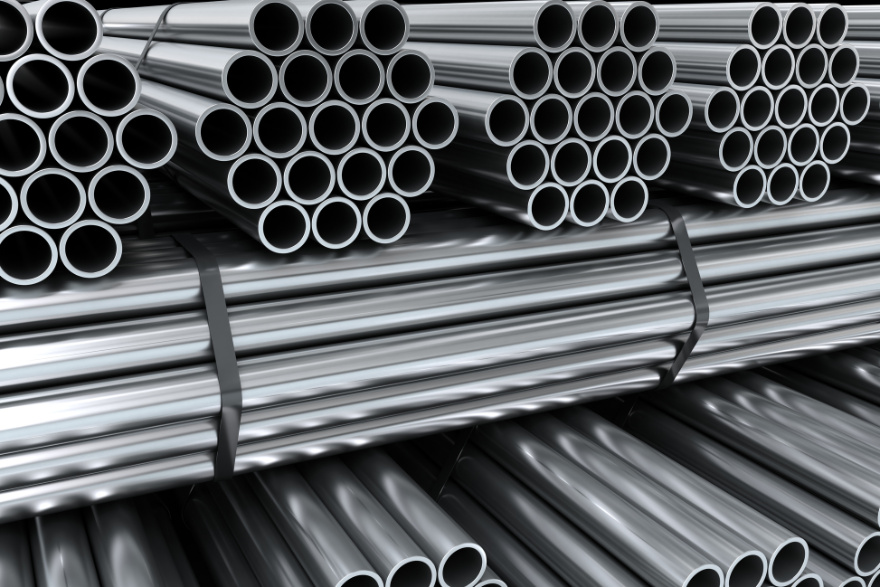
The program is driven by data—inspection records, work order histories, and failure mode analysis—rather than calendar-based replacement schedules or institutional intuition. Reliability analytics tools are now being incorporated to quantify risk and optimize capital deployment timing, a shift Flachman describes as moving beyond gut feel toward defensible, evidence-based decisions.
Unplanned failures in these systems produce unscheduled downtime, elevated safety exposure, and reactive spending. Getting ahead of them through proactive, phased investment is both a financial discipline and an operator safety commitment—and for Flachman, that distinction matters.
She talks about plant floor personnel with the ease of someone who has spent real time learning how they work, what they need from a capital project, and what happens to their days when an upgrade goes wrong. Her projects are designed not just to meet engineering specifications, but to make the people who run the equipment safer and their work more sustainable over time.
It is, ultimately, the same impulse that shaped her path into project engineering to begin with—a discipline steady enough to let her be present at home, purposeful enough to sustain years of patient, methodical work, and concrete enough that when the project finally lands, the outcome speaks entirely for itself.
Showcase your feature on your website with a custom “As Featured in Blueprint” badge that links directly to your article!
Copy and paste this script into your page coding (ideally right before the closing


